Collection: Felt Polishing Tools
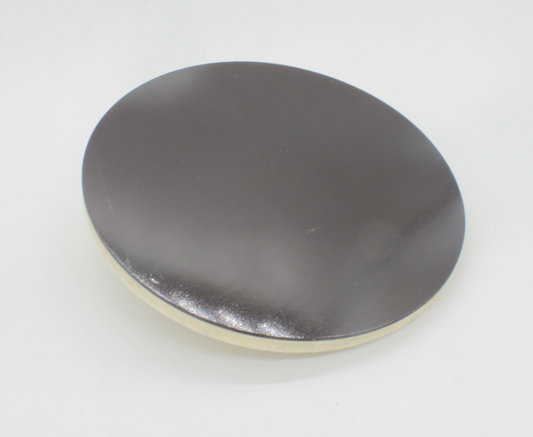
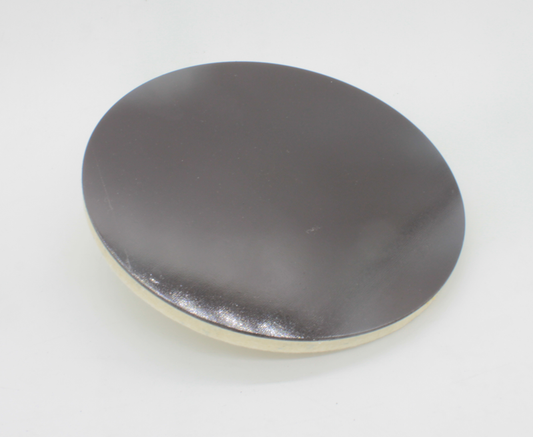
Professional felt polishing tools engineered for the final optical polishing stages of lapidary work, gemstone cabbing, glass edging, and jewelry finishing. Made from dense, pure natural wool felt, these tools retain polishing slurries and pastes uniformly, creating an optical mirror shine without orange-peel texture or facet rounding. Features magnetic-backed flat lap felt pads (6" to 24"), precision arbor-mounted cylindrical felt wheels (100mm to 250mm diameter, 20mm to 50mm face width), and 3mm/2.35mm shank-mounted miniature felt burs for flex-shaft detail polishing.
Available Sizes & Pricing
| Product Type |
Available Diameters |
Mounting Configuration |
Price Range |
| Felt Polishing Pad (Magnetic) |
6", 8", 10", 12", 14", 16", 18", 20", 24" |
Flexible magnetic backing |
$10.00 – $90.00 |
| Felt Polishing Wheel |
100mm, 150mm, 200mm, 250mm (20–50mm width) |
1/2", 5/8", 3/4", 1", 32mm arbor bore |
$20.00 – $52.00 |
Product Type & Selection Guide
| Felt Tool Format |
Ideal Machinery |
Target Surface |
| Felt Polishing Pads (Magnetic) |
Flat lap machines, horizontal rotary platens |
Flat slab faces, cabochon flat backs, large specimen flats |
| Felt Polishing Wheels |
Arbor-driven bench grinders, cabbing machines |
Domed cabochon crowns, curved contours, freeform sculptures |
| Felt Polishing Burs |
Dremel, Foredom flex shafts, micro-motors |
Carving recesses, drilled holes, tight crevices, intarsia joints |
Polishing Compound Compatibility Guide
| Polishing Compound |
Target Mineral Hardness |
Recommended Materials |
Expected Luster |
| Diamond Compound Paste (14k–50k) |
Mohs 7 – 9+ |
Agate, jasper, quartz, sapphire, jade, chert |
Ultra-crisp mirror finish on hard stones |
| Cerium Oxide Slurry |
Mohs 5 – 7 |
Glass, obsidian, opal, feldspar, rhodonite |
High-gloss optical transparency |
| Tin Oxide Slurry |
Mohs 4 – 6 |
Turquoise, lapis lazuli, malachite, fluorite |
Deep wet gloss without surface undercutting |
| Aluminum Oxide (Linde A) |
Mohs 6 – 9 |
Chrysoberyl, garnet, tourmaline, beryl |
Brilliant facet-grade polish |
Compatible Applications
- Final high-gloss mirror polishing on lapidary cabochons (agate, jasper, quartz, jade)
- Flat lap machine final stage with magnetic quick-change backing
- Bench grinder arbor-mount polishing for curved and domed stone profiles
- Art glass and architectural glass edge and bevel scratch removal with cerium oxide
- Large specimen slab polishing with heavy-duty 14" to 24" magnetic felt pads
Related Polishing Tools & Compounds
Frequently Asked Questions
-
Q: What polishing compound should I use with felt polishing tools?
A: For hard gemstones (Mohs 6.5+) such as agate, jasper, chalcedony, petrified wood, and corundum, apply diamond compound paste (typically 14,000 to 50,000 mesh) lightly onto the felt surface. For optical glass, fused silica, and softer silicates (Mohs 5 to 6.5), cerium oxide mixed with water into a creamy slurry provides an exceptional optical finish. For delicate, softer minerals like turquoise, malachite, or fluorite, use tin oxide or aluminum oxide to prevent surface damage.
-
Q: What is the primary difference between felt pads and felt wheels?
A: Felt pads are flat circular discs designed to sit on flat lap machines, allowing you to polish flat slab faces and the flat bases of cabochons. Felt wheels are cylindrical blocks that mount directly onto horizontal motor spindles, enabling you to work around domed cabochons and curved carvings.
-
Q: How do I select the right felt wheel size for my bench grinder?
A: Choose wheel diameter based on your grinder clearance: 150mm (6") for 6-inch bench grinders and 200mm (8") for 8-inch machines. For wide cabochons, select 40mm to 50mm widths to provide ample contact area; for smaller rings and delicate cabs, 20mm to 25mm face widths offer enhanced maneuverability.
-
Q: Should felt polishing tools be run wet, damp, or dry?
A: Always run felt tools slightly damp. Mix your polishing powder with just enough water to create a creamy paste, or apply diamond compound with a light drop of extender fluid. Never soak the felt in standing water, as saturated wool loses frictional efficiency, and never run completely dry to avoid thermal burning of both the stone and the felt.
-
Q: Which arbor bore options are available for felt wheels?
A: Felt wheels are supplied with precision bores in 1/2", 5/8", 3/4", 1", and 32mm configurations, matching standard commercial lapidary arbors and bench grinder drive shafts.