Collection: Lapidary Grinding & Polishing
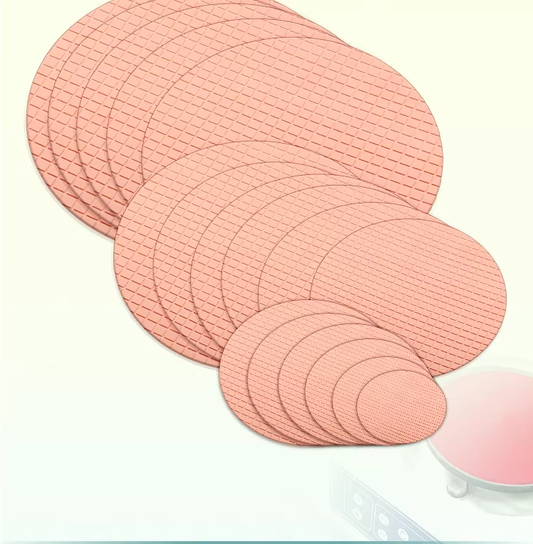
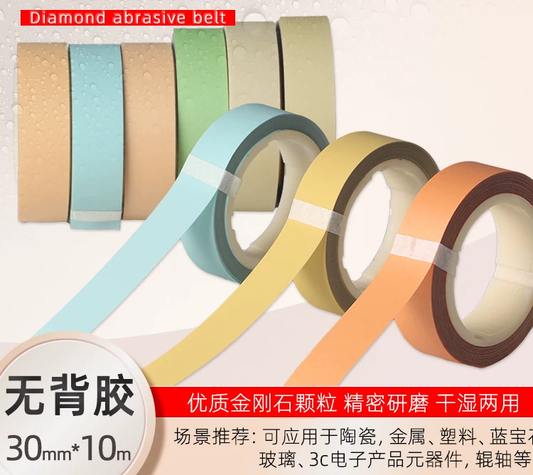
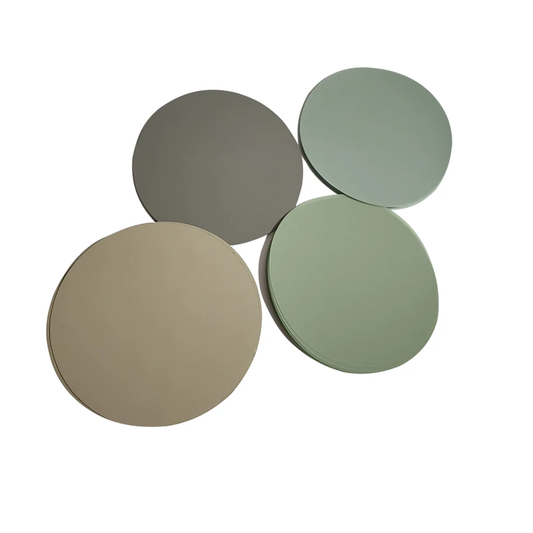
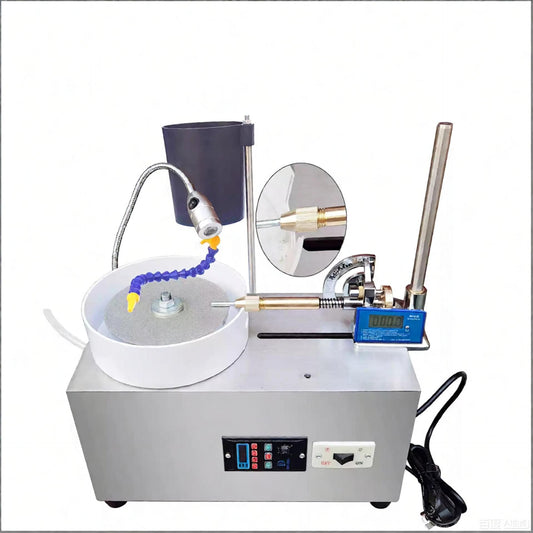
Comprehensive professional diamond grinding and polishing tooling engineered for lapidary artisans, gemstone cutters, and rockhounding studios. Covering the entire processing workflow from rough slab preforming through progressive diamond smoothing to optical 50,000 mesh mirror polishing. Our tooling lineup integrates heavy-duty sintered diamond wheels, flexible resin-bonded Nova soft wheels, expandable rubber drums, diamond sanding belts, magnetic flat lap discs, and optical polishing pads. Precision-engineered for optimal compatibility with standard 6" and 8" cabbing machines, horizontal flat laps, and bench grinder arbors with continuous water cooling.
Tooling Selection by Processing Stage
| Processing Stage |
Tool Type |
Grit Spectrum |
Workflow Role & Surface Finish |
| 1. Coarse Stock Removal |
Sintered & Electroplated Diamond Wheels |
60 – 220 Grit |
Rapid slab preforming, saw mark removal, establishing dome profile |
| 2. Dome Shaping & Smoothing |
Diamond Resin Soft Grinding Wheels |
280 – 600 Grit |
Eliminating coarse facets, blending curvature, scratch refinement |
| 3. Drum Sanding |
Expandable Rubber Drums + Belts |
120 – 1200 Grit |
Conforming to curved surfaces, intermediate uniform scratch removal |
| 4. Fine Pre-Polish |
Resin Soft Wheels & Smoothing Pads |
1200 – 8000 Grit |
Creating smooth satin sheen, preparing crystal surface for polish |
| 5. Near-Mirror Pre-Polish |
Diamond Nova Points & Ultra-Fine Laps |
14,000 – 50,000 Grit |
High-refraction pre-polish, eliminating micro-scratches |
| 6. Final Optical Mirror Polish |
Felt / Leather Laps + Diamond & Cerium Compound |
50,000 Mesh / Cerium Oxide |
Optical clarity, deep wet mirror shine on cabochon domes and flats |
| Flat Lap Surface Finishing |
Magnetic & Master Diamond Flat Lap Discs |
60 – 3000 Grit |
Precision planar grinding on slab faces, geodes, and cabochon bases |
Mineral Hardness & Coolant Compatibility
| Mineral Classification |
Mohs Hardness |
Representative Gemstones |
Recommended Cooling & Tooling Matrix |
| Hard Gemstones |
Mohs 7.0 – 9.0+ |
Agate, Jasper, Quartz, Corundum, Jade |
Continuous water flood; sintered diamond + diamond paste polish |
| Medium / Vitreous |
Mohs 5.5 – 6.5 |
Obsidian, Rhodonite, Feldspar, Art Glass |
Light water spray; resin diamond wheels + cerium oxide slurry |
| Soft / Heat-Sensitive |
Mohs 3.5 – 5.5 |
Opal, Turquoise, Malachite, Fluorite |
Heavy water mist, light contact pressure; tin oxide or aluminum oxide |
Compatible Applications
- Complete cabochon cutting and polishing on natural agate, jasper, chalcedony, quartz, turquoise, and petrified wood
- Precision flat lapping on specimen slabs, bookends, geode halves, and thunder eggs
- Faceted gemstone pre-polishing and crown/pavilion facet finishing
- Art glass beveling, cold working, bottle neck smoothing, and optical prism polishing
- Benchtop jewelry studio grinding, cabbing machine production, and commercial cutting setups
Related Lapidary Tool Collections
Frequently Asked Questions
-
Q: What tools are required to shape and polish a lapidary cabochon from rough rock?
A: A standard cabochon sequence begins with a diamond saw to trim rough slabs, followed by an 80–220 grit hard diamond wheel for initial dome profiling. Next, progressive resin-bonded soft wheels or expandable drum belts (280, 600, 1200, and 3000 grit) smooth away scratch ridges. The process finishes on a felt or leather wheel charged with diamond compound (14,000–50,000 mesh) or cerium oxide slurry for an optical mirror finish.
-
Q: What is the mechanical difference between lapidary grinding and polishing?
A: Grinding is an abrasive cutting process where diamond grains mechanically shear away stone to establish shape, geometry, and uniform scratch patterns. Polishing is an optical surface refining stage using sub-micron abrasive particles on compliant carriers (wool felt, leather) that micro-level the stone's microscopic crystalline topography without altering its gross dimensions.
-
Q: Can I perform lapidary grinding and polishing without a dedicated cabbing machine?
A: Yes. Many artisans successfully use standard bench grinders equipped with diamond wheels and arbor adapters, variable-speed rotary flex shafts with miniature diamond burs and Nova points, or horizontal rotary flat laps. Continuous water cooling must always be arranged regardless of the machine type.
-
Q: Why is water coolant strictly necessary across all grinding and polishing stages?
A: Grinding minerals dry causes rapid thermal friction that fractures thermal-sensitive stones (like opals and turquoise) and melts resin-bonded diamond matrixes. Furthermore, water cooling captures airborne mineral and crystalline silica dust, protecting lung health.
-
Q: How do I select the proper grit progression for hard versus soft minerals?
A: For hard stones (Mohs 7+ such as agate and jasper), follow a complete progression: 80 → 220 → 600 → 1200 → 3000 → 14k/50k. For softer stones (Mohs 4–6 like turquoise or malachite), avoid very coarse grits (start at 220 or 400 grit) to prevent deep fracturing, and finish with tin oxide or aluminum oxide rather than aggressive diamond paste.